
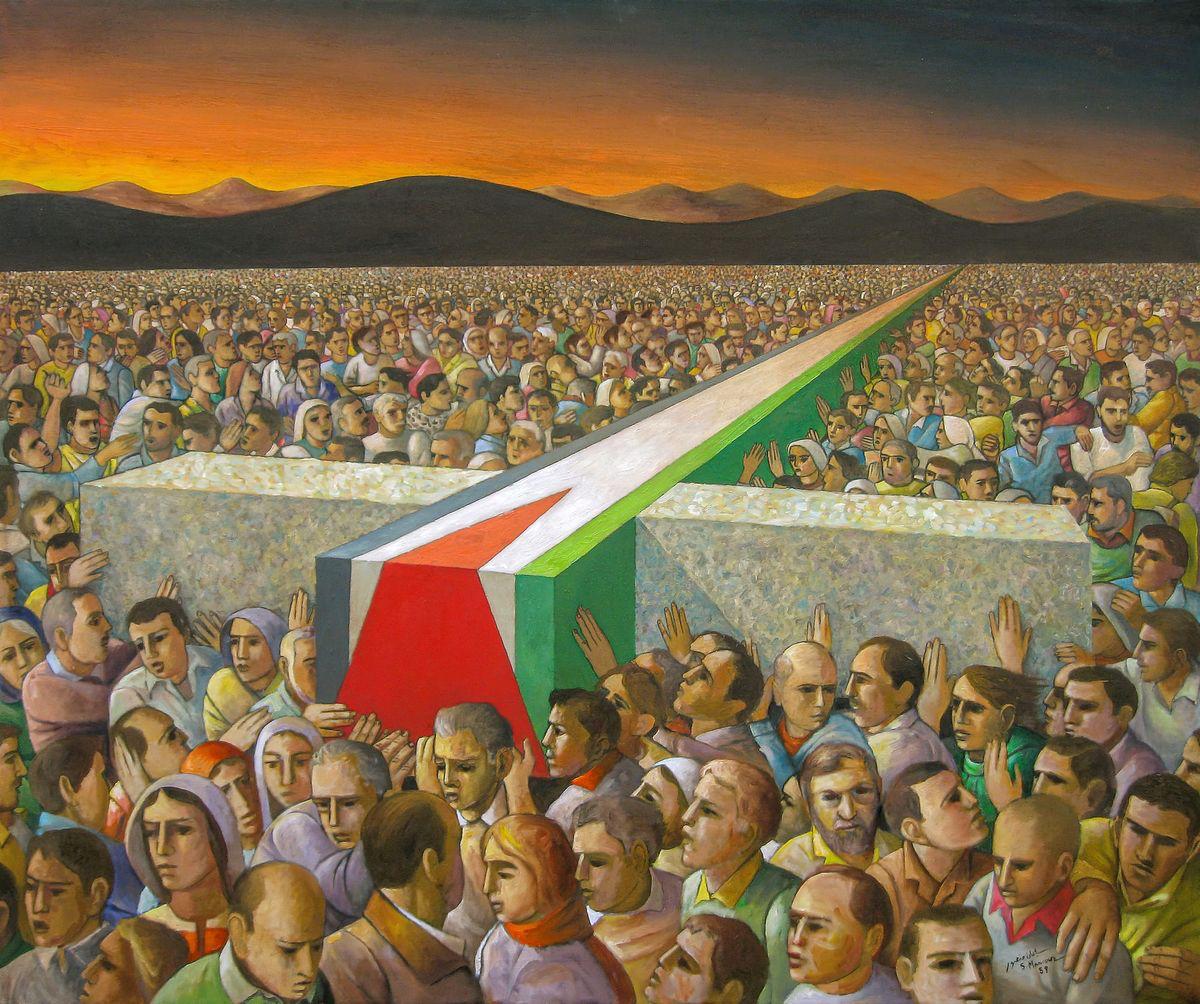
I felt a strange sadness when I heard about the death of Sliman Mansour.
I never met him, but his work has stayed with me for a long time. What drew me to his paintings was not only the way he painted Palestine, but the position from which he painted it. He stood with his people—with their land, their memories, their everyday lives and their pain.
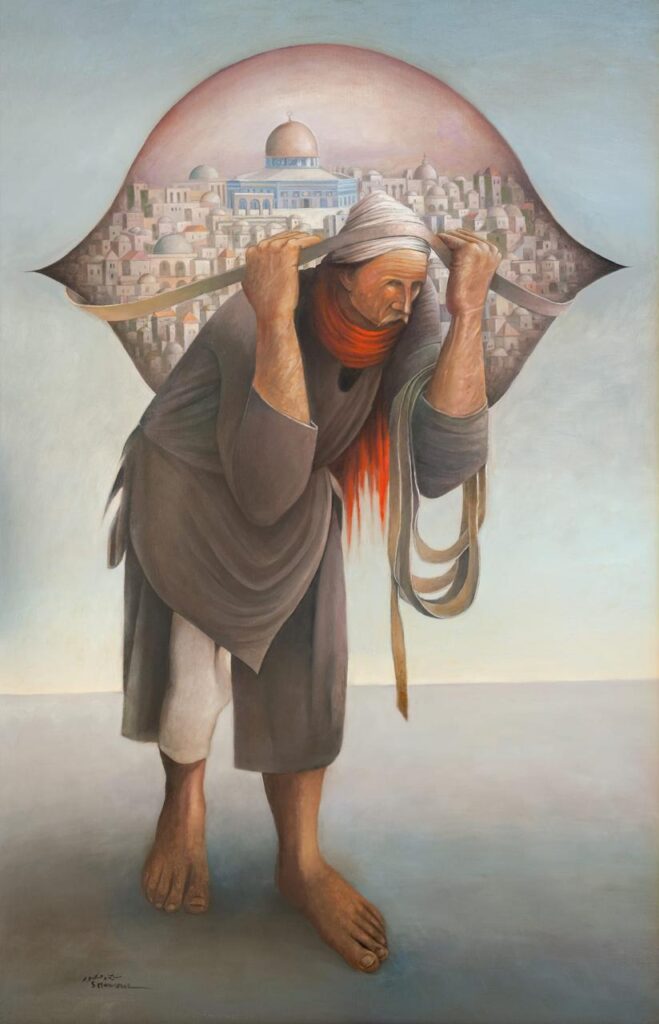
His Camel of Hardship, showing an old Palestinian man carrying Jerusalem on his back, is one of those images I keep coming back to. It is such a simple image, yet it carries so much. Jerusalem looks like a burden, but also like something the man will never agree to leave behind.
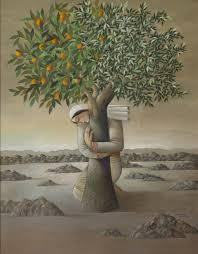
That is what I like about Mansour’s work. His protest doesn’t always scream. Sometimes it is an olive tree, a village, a woman in traditional dress, a farmer, or simply a landscape. He understood that when a people’s identity and history are under threat, even painting their ordinary life can become an act of resistance.
Perhaps this is why his death made me think beyond Palestine.
It made me think about artists around us.
In India, I sometimes feel uncomfortable with the selective silence we see among artists and intellectuals. We are often quick to speak when it is safe to speak, when the subject is fashionable, or when the power we are questioning is far away. But when the powerful are closer to us, the same courage can suddenly become complicated.
Of course, there are Indian artists who have spoken up, and I deeply respect them. But I wish we saw more of that courage.
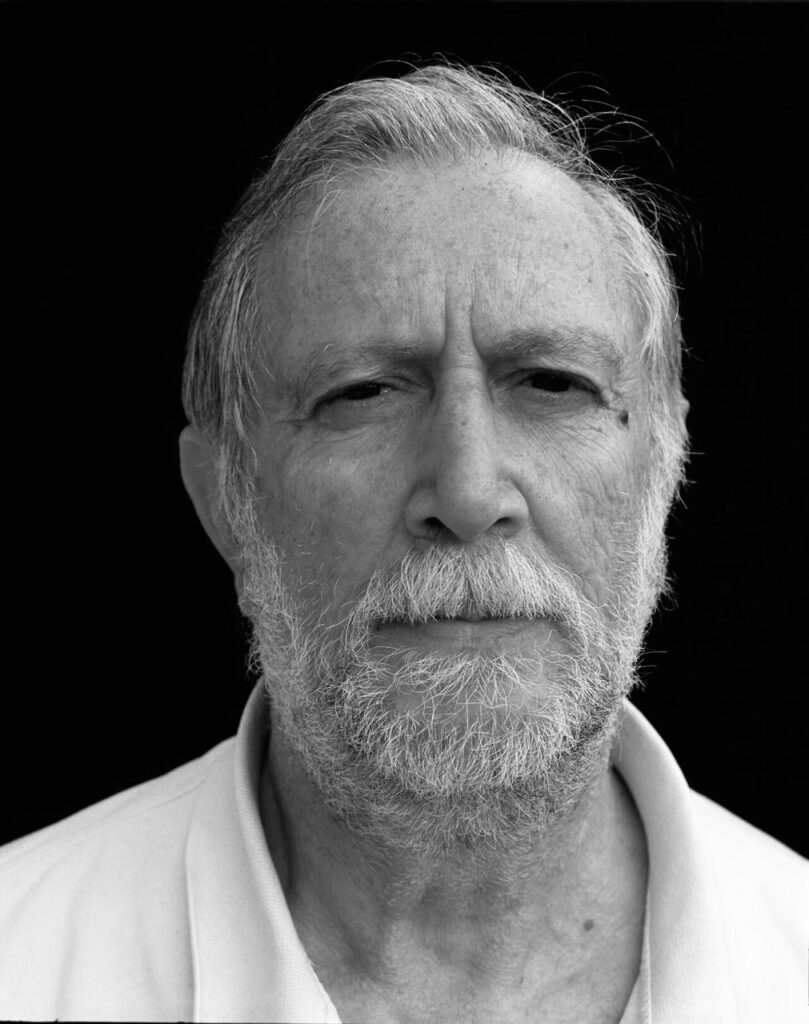
Mansour reminds me why an artist’s voice matters. An artist doesn’t necessarily have to take a political position on everything. But when ordinary people are suffering, when lives and homes are being destroyed, when a powerful state stands against a people with far less power, I find it difficult to understand complete silence.
For me, standing with people is not necessarily standing against a country or a community. It is standing for human beings.
And that is what I see in Mansour.
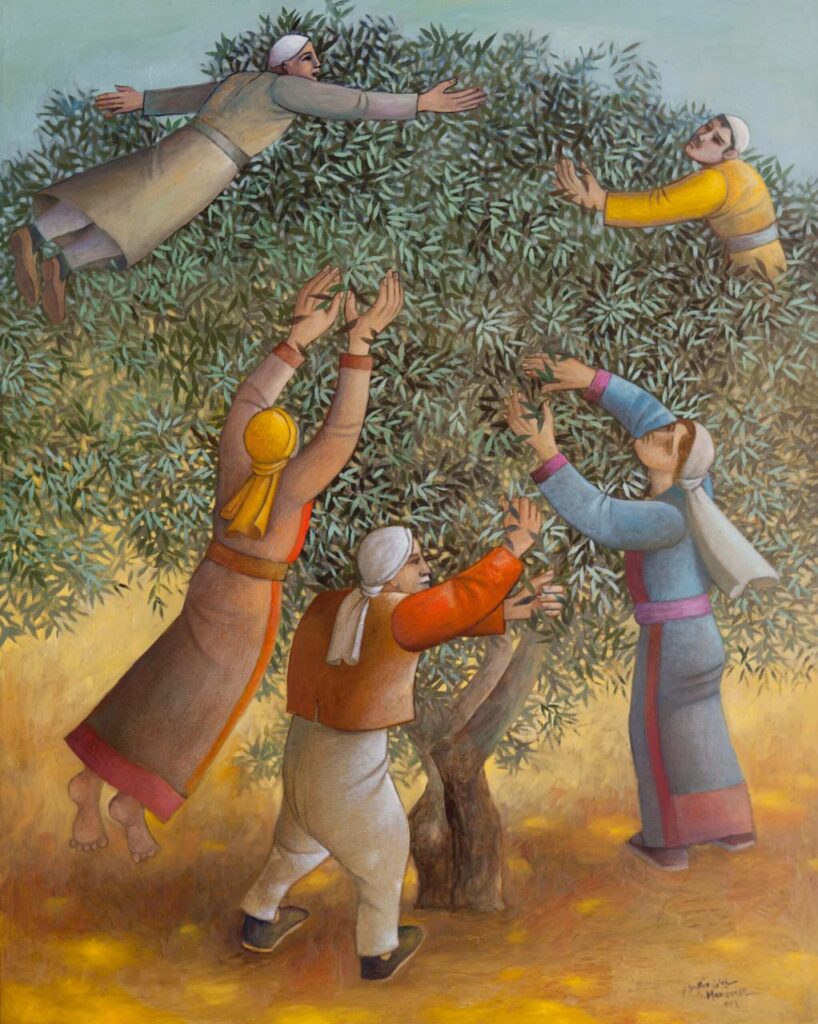
He chose to stand with Palestinians even when they were the weaker side. He chose to preserve their memory when erasure was taking place around him. He chose to paint his people not merely as victims, but as human beings with a culture, a history and a deep connection to their land.
I think that is what I will remember about him.
Not simply that he was a Palestinian artist or a protest artist, but that he used his place as an artist to stand beside people who needed someone to stand with them.
Perhaps that is one of the simplest responsibilities of art.
To see.
To feel.
And, when necessary, to stand.
With people. With humanity. And against power.

Beautifully articulated article.
Great Salute to Sliman Mansour