
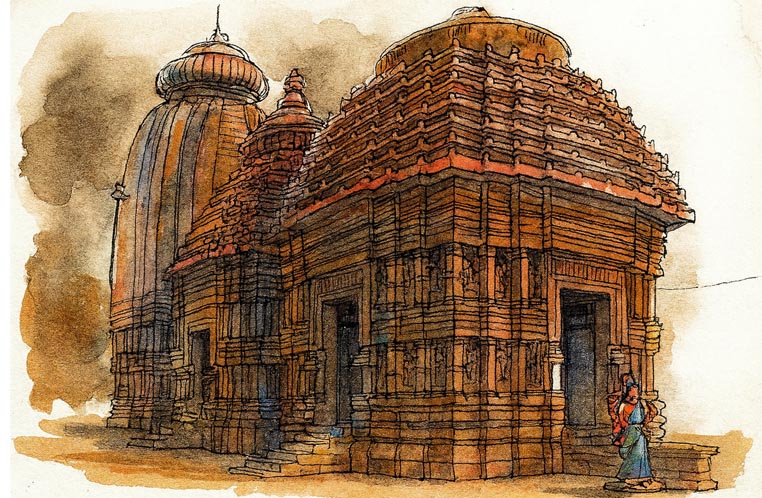
It is said that without ‘Shakti’ the divine energy, ‘Shiva’ becomes ‘Shava’, a lifeless corpse. This eternal truth reveals that in the dance of the cosmos, both principles are equally vital. Shakti is the pulse of creation, often envisioned as feminine power, Matrushakti, the protective, nurturing force of a mother. Just as a mother shields her children from every storm, so too does Shakti embrace the world, guarding it in her cosmic arms. Our ancestors understood this wisdom deeply. That is why every Indian village reveres a Grama Devati (village goddess), lonely forest paths shelter shrines to the Mother, and mountain peaks crown her Devi Peethas. From this devotion to the Mother principle arose the network of Shakti Peethas, spread across the sacred geography of the subcontinent.
According to legend, when Daksha Prajapati insulted Shiva by excluding him from a grand yajna, Sati, unable to bear the humiliation of her lord, immolated herself in the sacrificial fire. Stricken with grief and fury, Shiva wandered the worlds with Sati’s charred body upon his shoulder, his cosmic tandava shaking the heavens. Fearing the annihilation of creation, the gods prayed to Vishnu, who, with his Sudarshana Chakra, cut Sati’s body into pieces. Wherever her body parts or ornaments touched the earth became a Shakti Peetha. The Shiva Purana and Kalika Purana speak of 51 such sacred sites, linked to the 51 letters of the Sanskrit alphabet, though some traditions speak of 108. They are scattered across India, Nepal, Tibet, Sri Lanka, Pakistan, and Bangladesh. Among them, four are hailed as the Adi Shakti Peethas: Bimala – feet (Puri, Odisha), Tara-Tarini – breasts (Ganjam, Odisha), Kamakhya – yoni (Guwahati, Assam), Dakshina Kalika – face (Kolkata, West Bengal). And today, among the four Adi Shakti Peethas, we are standing before Tara-Tarini.
On the serene banks of the Rushikulya, hailed in the Rig Veda as the elder sister of the Ganga, rises Kumari Hill (also known as Purnagiri, Ratnagiri, or Tarini Hill), the abode of Maa Tara-Tarini. This is the place where, it is believed, the breasts of Sati fell, blessing the land with the eternal presence of the Mother. Close by lies the famous Jaugada Rock Edict of Ashoka, a silent witness to centuries of history. The present temple, built in the 17th century, has been a seat of Tantric worship since its inception not raised by royal hands, but through the devotion of a Brahmin, Basu Praharaj. Pilgrims ascend 999 steps to reach the hilltop sanctum. Inside, two stone idols of Tara and Tarini, adorned in gold and silver, are worshipped alongside two brass faces, the Chalanti Pratima, or moving forms of the goddess. Here, Kalabhairava manifests as Someshwara (for Tara) and Udayeshwara (for Tarini). Every month, the first day brings special rituals. But it is in Chaitra (March–April) that the temple comes alive in a sea of devotion. Each Tuesday of this month, lakhs gather for the Chaitra Yatra, offering prayers from dawn till deep into the night, Mondays until 1 a.m., Tuesdays until 11 p.m., as the doors of the temple remain open, as if the goddess herself refuses to turn away her children.
Reaching the hilltop temple has become much easier in recent years. While you can still climb the traditional stone steps, there is now a concrete road carved into the hill by the state authorities, as well as a ropeway facility for those who prefer it. The moment you step onto the hilltop, the cool breeze flowing from the Rushikulya River greets you, washing away fatigue and stress. From the temple premises, the view of the river is nothing short of mesmerizing, a vast, shimmering ribbon winding through the land. If fortune favours you and you arrive at sunset, you will witness one of the most breathtaking sights of your life. The golden rays dance on the surface of the Rushikulya, holding you still, as if time itself has paused. By then, the temple begins to stir for the evening aarti. The once quiet surroundings quickly fill with devotees. With each mantra chanted by the priest, you can feel your worries slipping away, slowly, yet powerfully. The flames of the sandhya aarti seem to burn away every burden, replacing them with an indescribable calm that seeps deep into your mind and soul. For a few moments, there is nothing, no thought, no worry, only your eyes fixed upon the face of Maa Adi Shakti. As the ringing of bells and the rhythm of the dhol gradually soften, the trance breaks. You feel lighter, unhurried, at peace. The temple steps seem to invite you to rest, and sitting there, you might feel as though you have returned home after a long absence, into the warm, comforting lap of your mother.
The Taratarini temple displays intricate stone carvings that reflect the rich tradition of Kalinga architecture. The walls, pillars, and door frames are adorned with depictions of deities, floral motifs, and geometric patterns, all carved with fine attention to detail. Scenes from Hindu mythology, especially those connected to Shakti worship, are common, along with symbolic motifs like the lotus, representing purity and divinity. The carvings also feature sculpted panels showing celestial beings, musicians, and dancers, capturing the cultural vibrancy of the period in which they were made. Many elements carry the influence of medieval Odishan art, with balanced proportions, expressive faces, and ornate jewellery on the figures. The central idol of Maa Taratarini consists of two identical stone figures representing the twin goddesses, considered forms of Adi Shakti. The idols are carved from black stone, with minimal ornamentation, preserving an ancient and austere look. Unlike many temples where the deity is heavily decorated, the Taratarini idols retain their original stone form for most of the year, covered only with fresh flowers, vermillion, and cloth offerings. The twin goddesses are seated on a stone platform, believed to be a natural rock formation that has been sanctified over centuries. The simplicity of the idols contrasts with the elaborate carvings of the temple’s outer structure, drawing devotees into an intimate spiritual connection. During special festivals, the idols are adorned with gold and silver ornaments, yet their primary charm lies in their timeless stone presence, embodying strength, serenity, and divinity.
The western sky was still painted with faint red and grey when we started to descend from the hill. In patches, the village road was guarded by kewra shrubs on both sides, enough to cast a spell of horror on a lone traveller. We stopped at a village chouk to grab a cup of tea. Only tea lovers can understand how necessary it becomes to snatch these cups of warmth during a journey. In spite of knowing the harmful effects as a doctor, sometimes it becomes irresistible to say no. The shopkeepers were an old couple, already in a hurry to announce their pack-up for the day. The old woman appeared a little reluctant before serving another round of tea for us, but her old partner persuaded her, saying, “How can you deny tea to a visitor to our motherland? What impression will they carry?” Still inconvenienced, the old lady went to finish her washing job before wrapping up everything. The old man looked at us, with a thin smile and trembling hands, replied, “Budhi hoi galani ta!” (She has gotten old, so she is irritable and stubborn). We smiled, thanked him, and after paying for the tea, started our journey towards the Budhi Thakurani temple.
Unlike the stone-carved splendour of Taratarini temple, Budhi Thakurani’s shrine is modest in structure but deeply rooted in the town’s cultural and emotional fabric. The goddess is considered the presiding deity of Berhampur, and her worship is intertwined with the life and identity of the town’s people. Every two years, Berhampur transforms into a grand stage for the Budhi Thakurani Jatra, a month-long festival that draws thousands of devotees and spectators. It is believed to have originated centuries ago when the weaving communities settled in Berhampur, bringing their own traditions and rituals. The Jatra is unique for its vibrant street processions, elaborate rituals, and folk performances. The most striking feature is the Ghata Yatra, where devotees carry the goddess’s decorated image or symbolic pot through different localities, blessing households and businesses. The festival is not just a religious observance but also a cultural carnival, streets brim with colourful decorations, traditional Odia music, and vendors selling festive treats. Folk dancers, mask performers, and drummers accompany the deity’s procession, creating a moving spectacle of sound and colour. As in Taratarini’s sandhya arti, there is a rhythmic build-up in the atmosphere; the chants, the beats of dhol, and the collective devotion gradually pull every onlooker into the sacred mood.

After offering our prayers at the Budhi Thakurani temple, we returned to our hotel room. Since the temple is located right in the heart of Berhampur city, there was a sense of safety, the darkness of night in a strange place didn’t feel intimidating at all. We requested the taxi driver to first drop our mother at the hotel and then leave the two of us sisters at the bustling market. Our plan was simple: to walk through the lanes of Berhampur bazaar, observing people and their everyday rhythms in an unfamiliar setting. This is our favourite evening ritual whenever we travel, whether it’s Nainital, Haridwar, Udaipur, Khajuraho, or Berhampur, the name hardly matters. Wandering aimlessly among the locals lets you feel the pulse of a place, as if you’ve touched its hidden nerve. You sense its heartbeat in the casual conversations, the shopfronts, the aromas from roadside stalls, and the unhurried yet purposeful movements of its people. We strolled for nearly an hour and a half, soaking in the city’s sounds and colours, until our mother called, asking us to return to the hotel. The taxi driver had reminded her that we needed to be ready early the next morning for the next leg of our journey.
The next morning, we enjoyed a hearty breakfast at our hotel. The taste of traditional Berhampuri puri-upma was not just delicious but delightfully unique, a flavour that lingers long after the meal is over. If you ever find yourself in Berhampur, I’d strongly recommend trying as many varieties of snacks and tiffin items as you can, even if it means skipping your regular meals for the day. Before heading home, it’s worth carrying a few packs of Berhampuri pickles and papad. The range is impressive, pickles made not only from different vegetables and fruits, but also from prawns and even a special mix of dry fruits known as Navratan Achar, my personal favourite. By the time we had finished our breakfast, our taxi driver had arrived, ready to take us to our next destination, the Mahuri Kalua Devi temple.
Leaving Berhampur city behind, we travelled for about 15 kilometres, first along the smooth stretch of a broad open road, and then turning onto a narrower road that wound through dense greenery, the sunlight filtering in patches as we entered the jungle route to Mahuri Kalua, our next destination. Here, the Mahuri Kalua Devi Temple stands as one of southern Odisha’s most revered Shakti shrines. Dedicated to Goddess Kalua, a fierce manifestation of Maa Kali, the temple rests against a picturesque backdrop of hills and forests near Mahurikalua village in Ganjam district. The presiding deity, carved from black stone, is portrayed in her formidable form, dark-complexioned, crowned with a garland of skulls, and seated with weapons in hand, embodying the destruction of evil. According to local lore, Maa Mahuri Kalua was once the royal family deity of the Mahuri kings, and over time, her worship spread far beyond the royal household. Another belief speaks of the goddess appearing in the dream of a local king, commanding him to establish her temple at the site where it now stands. The temple complex today comprises two distinct shrines. The older one, perched within a cave on the hilltop, was once accessible only to the king and his family. In later years, a second temple was built at the foot of the hill to allow all devotees to offer their prayers without undertaking the steep climb. Thanks to the Odisha Tourism Department, the cave shrine is now reachable by newly constructed steps, around 675 in total. The lower temple lies conveniently close to the parking area. Our visit happened to fall on Sankranti, an especially auspicious day for worship, when the temple comes alive with elaborate rituals, special offerings, and continuous bhajans. As we drew closer to the shrine, the air grew denser with devotion, the crowd swelling with women carrying plates of flowers, vermilion, and coconuts; men holding earthen lamps; and the rhythmic sound of conch shells and dhols blending with devotional chants. Inside the bustling courtyard, the fragrance of incense mingled with the sweet aroma of jaggery-based prasad, creating an intoxicating atmosphere of faith. The temple sees similar fervour during Durga Puja and Kali Puja, when thousands flock to seek the goddess’s blessings. With the silent hills standing sentinel in the background and the goddess’s fierce gaze fixed upon her devotees, the experience was both humbling and electrifying, a living connection between land, people, and deity that has endured through centuries of legend and worship.
We left Mahuri Kalua around 11 a.m., beginning our journey towards Sidha Bhairabi Temple. On the way, we made a brief stop at the Panchama Ganesha Temple, another serene and captivating spot worth cherishing. From there, our route took us through the bustling streets of Berhampur town, a short stretch along NH16, and then onto a narrower road that wound its way towards the temple. As we approached Sidha Bhairabi, the festive pulse of Sankranti was unmistakable, felt even from a considerable distance. Outside the temple, the wide open field had transformed into a vibrant local bazaar, resembling a lively mina bazaar or village fair, where stalls overflowed with colourful goods, snacks, and the cheerful hum of the crowd.
The Siddha Bhairavi Temple, nestled in the quiet village of Mantridi about 15–18 kilometres from Berhampur in southern Odisha, is a revered Shakti Pitha dedicated to Goddess Bhairavi, a fierce and protective aspect of Parvati. The temple’s presiding deity is the unique idol of Eka-Pada Bhairavi, depicted with four arms and a single leg. It is believed to have been unearthed by a farmer while ploughing his field in 1937. Since then, it has drawn devotees who revere the goddess as a granter of siddhi, or spiritual accomplishment. The temple complex is expansive and spiritually inclusive, housing 108 sub-shrines dedicated to various deities from across the Hindu tradition. These include the twelve Jyotirlingas, Vaishno Devi, the Dashavatara, Venkateswara, Ranganatha, Meenakshi, Badrinath, and even Lord Jagannath with his siblings, creating a rare blend of Shaktism and Vaishnavism in one sacred space. Legend says that sailors and fishermen often seek her blessings for safe voyages, while saints and seekers come in search of divine grace. The temple comes alive on Tuesdays and during every Sankranti, when waves of pilgrims arrive to offer prayers. Major festivals such as Navaratri, Dussehra, and the Chaitra Jatra are celebrated with great fervour, marked by special rituals and vibrant processions. Surrounded by lush greenery and a blooming garden that softens the air with fragrance, the Siddha Bhairavi Temple exudes a rare blend of serenity and power. Standing in its courtyard, with the rhythmic chants and temple bells weaving through the breeze, one feels the goddess’s presence, not as a distant deity, but as a living force guarding her land and people.
While speaking of the Shakti Pithas of Ganjam, one cannot overlook the Narayani Temple. Though we did not include it in this particular trip, we had visited the shrine a few years ago during our journey to Chilika. This sacred site is easily accessible, located just a short distance from NH16, with a clear signboard marking its presence.

For me, the most captivating part of the journey to Narayani Temple was passing through the dense sal forest before arriving at the lush greenery surrounding the shrine. Visiting during winter feels like a special reward. The cool, soothing air and serene surroundings create an atmosphere of pure calm. Once you’ve soaked in that tranquility, the next leg of the journey, towards Chilika. Which is a once-in-a-lifetime opportunity to witness thousands of migratory birds painting the waters with life and color, completing the spiritual and sensory journey. Narayani Temple itself stands as a revered Shakti Pitha, dedicated to Goddess Narayani, a powerful ten-armed form of Durga. Legend speaks of her as both a compassionate guardian and a fierce destroyer of evil, keeping her devotees and nearby villages under her watchful protection. Though the temple’s ancient roots predate the 12th century, it was lovingly restored by the Zamindars of Khalikote in the early 18th century, reaffirming its place in local devotional life. Architecturally, the temple embraces the Khakhara Deula style, a distinctive form within Kalinga architecture, marked by its roof, truncated and barrel-shaped, designed especially for feminine deities. This stylistic choice gives the temple a uniquely graceful silhouette, complementing its natural surroundings. The temple’s design, while traditional, is unassuming, allowing the deity and devotion to take center stage rather than elaborate ornamentation. In the garbhagriha (sanctum sanctorum) resides the Goddess Narayani, adorned with vibrant flowers, silks, and vermilion, as devotees offer their prayers for protection, prosperity, and well-being. Festivals here bring the space to life. During Durga Puja and the springtime Magha or Chaitra celebrations, the temple springs into celebration, devotees gather for prayer, rhythmic drumming fills the air, and the colors of procession and ritual brighten the sacred precinct. Pilgrims also visit year-round, drawn by the quiet energy of devotion, both in the temple’s cool, fragrant air and within their own hearts.
While speaking and writing about Devi temples or Shakti pithas of Ganjam, no writing will be completed without speaking about Danda Jatra. This ancient festival, deeply interwoven with the spiritual and cultural identity of southern Odisha, is not just a performance or ritual, it is a living heartbeat of devotion, discipline, and surrender. The very name Danda, meaning “penance” carries the weight of sacrifice, endurance, and the willingness to purify oneself in the service of the Divine Mother. For the devotees, or Danduas, it is not merely an annual event; it is a journey of transformation, where mind, body, and spirit are offered to Shakti in her fierce yet nurturing form. The roots of Danda Jatra stretch back over a thousand years, carrying echoes of tribal traditions, Shaivite austerities, and Shakta worship. The festival honours both Lord Shiva and Goddess Kali, though the prime focus rests on the Mother’s energy, her power to protect, destroy evil, and restore balance. It is celebrated in the month of Chaitra, usually under the blazing summer sun, when the heat itself becomes part of the penance. For the Danduas, every drop of sweat streaming down their brow is a ritual purification.

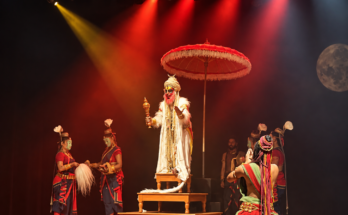
The festival generally runs for thirteen to twenty-one days, culminating on Vishuba Sankranti or Pana Sankranti. During this time, Danduas renounce comforts, sleep on bare earth, eat only simple meals, and walk long distances, all as acts of devotion. The day begins with the Pata Danda, a ceremonial pledge, after which every movement, every breath, is an offering. As dusk falls, villages and town squares transform into arenas of sacred spectacle. The rhythmic beat of dhols pulses through the air, mingling with the shrill call of the mahuri. Smoke from oil lamps curls upward, mingling with the aroma of burning incense and the earthy scent of dust from the dry village paths. The Danduas’ red and saffron attire flutters in the wind, and the glint of metallic ornaments catches the dying sun’s rays. Their performances, balancing on ropes, walking over embers, and bending backward under the weight of long staffs, are both breathtaking and spine-tingling, evoking awe in every spectator. Women throng around, singing devotional songs, their voices rising in harmonious waves that blend with the pounding drums. Children scamper about, wide-eyed, while elders quietly observe, hands folded, feeling the sacred tension in the air. Every clap, every chant, every footstep becomes a pulse in the festival’s living rhythm. The fire from Agni Danda rituals radiates warmth, while the dust and heat mix with the intoxicating scent of jaggery-based offerings carried by devotees, creating an atmosphere that is visceral and all-encompassing. The Danda itself is a wooden staff, symbolizes the cosmic axis, connecting the earthly to the divine. The colour red dominates, signifying both the goddess’s ferocity and the life-force of the universe. Rituals often incorporate natural elements like fire, earth and water, reminding the participants and spectators alike of Shakti’s power to maintain cosmic balance.
Legends tell of the Danduas being blessed by the goddess herself, their endurance sanctioned and strengthened by her gaze. Every village visited, every ritual performed, is imbued with the hopes of the community, for rain, a good harvest, protection from illness, and the vanquishing of evil. The festival preserves centuries-old oral traditions, blending myth and local lore, creating a spectacle where devotion and cultural heritage merge seamlessly. Even today, in the midst of modern distractions, the festival holds a magnetic pull. The fiery glow of lamps, the dust-laden winds, the rhythmic drumbeats, the scent of incense and jaggery, the sweat and raw effort of the devotees, all these elements combine into a living tapestry of faith. Witnessing it, one does not merely observe a ritual; one feels the pulse of devotion, the raw power of surrender, and the timeless connection between the people, the land, and the Mother.
During my recent visits to Ganjam district, I discovered that it holds far more than just the famed Danda Jatra. The region is a treasure trove of hidden folk arts, cultural practices, and traditional performances that deserve deeper research and discussion, such as the Ravana Chhaya dance, Sikara or Mruga Nata, Mukha Nacha, Bagha Nacha, Jodi Sankha, Prahlada Nataka, Bharta Leela, Radha Prema Leela, Daskathia, Osakathi, and Chadheya dance. Beyond performing arts, Ganjam is also home to exquisite traditional crafts, including the flexible brass fish of Belaguntha, Ganjifa playing cards, Berhampuri silk weaving, and brass and bell metal crafts with a history spanning over 300 years. From friends and acquaintances, I often hear reflections like, “Many forms of folk art and traditional activities we used to see as children have been lost over time.” A significant number of these traditions are closely tied to cultivation, local seasons, and the rhythms of village life. While some practices have been preserved through the dedicated efforts of enthusiasts and communities, many others are now on the verge of extinction, quietly slipping away with each passing generation.



Your article took me back twenty years, bringing back memories of my posting at Berhampur. Although I had visited the Tara Tarini Temple, I was unaware of its profound history. I truly appreciate the poetic style of your writing — it is both informative and beautifully expressed. Even readers who haven’t visited the place can vividly feel as though they are experiencing it in person. Thank you.
Greetings from Los angeles! I’m bored at work so I decided to check out your blog on my iphone during lunch break. I really like the information you present here and can’t wait to take a look when I get home. I’m surprised at how quick your blog loaded on my cell phone .. I’m not even using WIFI, just 3G .. Anyhow, excellent site!